Struggling with gloves that wear out too fast or don't offer enough grip? This costs you money and impacts job performance. Let's find the right PU glove for you.
To choose the right PU coated glove, decide your priority. For excellent grip and flexibility in dry or light oily conditions, choose a soft PU coating.1 For maximum durability and a longer lifespan where high grip isn't critical, choose a dry PU coating.2
That's the quick answer, but there's more to it. The type of PU coating on a glove changes everything—from how it feels to how long it lasts.3 As a manufacturer for over 20 years, I've seen how picking the right one makes a huge difference. Let’s dive deeper so you can make the best choice for your team and your budget.
Should you prioritize grip over durability in a PU glove?
Need a glove with amazing grip for handling small, slick parts? But the gloves you buy wear out so fast, which is a big cost. The secret is the soft PU coating.
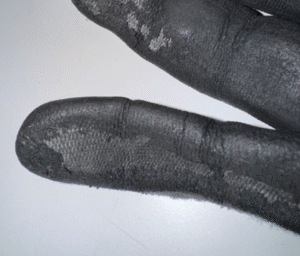
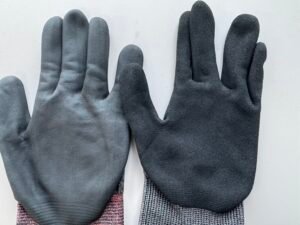
A soft PU coating provides superior grip and flexibility, making it perfect for tasks that need high dexterity.4 This softness, however, means the glove will have lower abrasion resistance and a shorter lifespan compared to harder coatings5. It’s a trade-off between performance and durability.
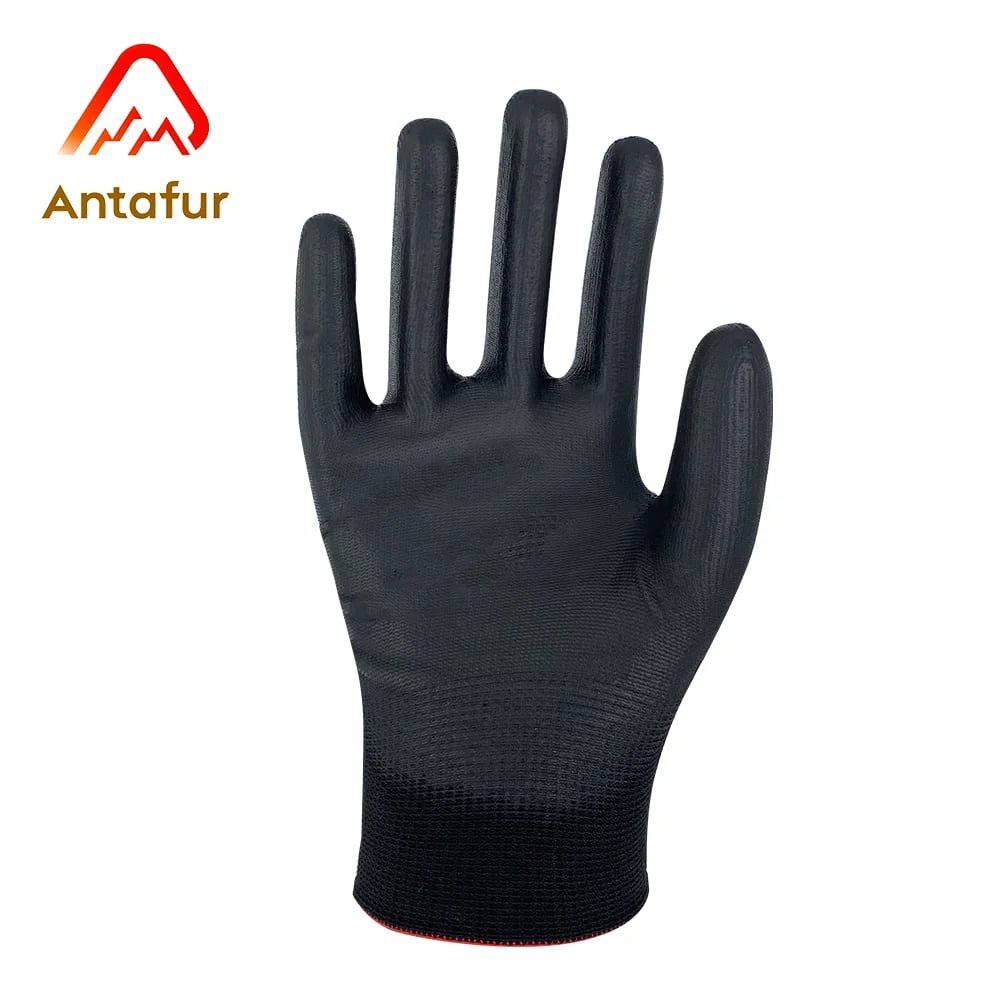
When we talk about soft PU, think about its texture. It feels slightly tacky and more rubber-like. This quality allows the glove to conform perfectly to the hand and create more surface friction6, which is why the grip is so fantastic. It's the go-to choice for industries where workers handle small, delicate, or slippery components. The increased flexibility also reduces hand fatigue over long shifts7, which is a big plus for productivity. However, that same softness makes the coating more susceptible to wear and tear. Constant friction will rub away the coating faster than a harder alternative.
When to Choose Soft PU Coated Gloves
If your team's work involves any of the following, a soft PU coating is likely the right choice:
- Electronics Assembly8: Handling tiny circuits and components.
- Small Parts Handling: Working with nuts, bolts, and screws.
- Quality Inspection: Needing tactile sensitivity without leaving marks.
- Automotive Detailing: Where a sure grip on tools and parts is key.
Here’s a simple breakdown:
| Feature | Soft PU Coating |
|---|---|
| Primary Pro | Excellent Grip & Flexibility |
| Primary Con | Lower Durability & Abrasion Resistance |
| Best For | Dexterity-focused, detailed tasks |
| Feels Like | Slightly tacky, flexible, and comfortable |
| Cost Impact | Lower upfront cost, but may need more frequent replacement |
When is a more durable PU glove the better choice?
Your workers go through gloves too quickly doing general tasks. The constant reordering is a hassle and really adds up. You need a glove that can simply last longer without fancy features.
A dry or firm PU coating is designed for durability.9 It offers excellent abrasion resistance and a much longer service life for general handling tasks10. The trade-off is that it provides less grip and flexibility compared to a soft PU coating.
The dry PU coating feels smooth and firm to the touch. It doesn't have that slightly sticky feel of its softer counterpart. This formulation creates a tougher, more resilient surface that stands up well to friction and repeated handling of rough materials like cardboard boxes, wood, or unfinished metals. While you do sacrifice some of the premium grip and flexibility, you gain significant longevity. This makes the dry PU glove a workhorse for many general-purpose applications where hand protection and durability are more important than the ability to pick up a tiny screw. It's a practical, cost-effective solution for high-volume use.
When to Choose Dry PU Coated Gloves
This type of glove excels in environments where the main goal is to protect hands and make the gloves last. Consider it for:
- General Warehousing: Moving boxes and packing.
- Construction Cleanup: Handling debris and non-specialized materials.
- General Maintenance: Basic repairs and equipment handling.
- Logistics and Shipping: Where durability is more important than fine grip.
Here is how it compares:
| Feature | Dry PU Coating |
|---|---|
| Primary Pro | High Durability & Abrasion Resistance |
| Primary Con | Reduced Grip & Flexibility |
| Best For | General-purpose, high-wear tasks |
| Feels Like | Smooth, firm, and robust |
| Cost Impact | Saves money over time due to fewer replacements |
Conclusion
Choosing the right PU glove is simple. Match the coating to your main task: soft PU for high grip and dry PU for long-lasting durability. This ensures both safety and value.
"Dexterity & Grip Gloves | Precision Safety Hand Protection", https://fortessafety.com/ranges/dexterity-grip/. A neutral occupational-safety or materials source on polyurethane-coated gloves can support that PU coatings are commonly selected for dexterity and grip in dry or lightly oily handling, while not proving performance for every proprietary formulation. Evidence role: general_support; source type: institution. Supports: Soft PU coatings are appropriate when grip and flexibility are priorities in dry or lightly oily work conditions.. Scope note: Support is likely contextual because glove grip varies by coating formulation, liner, surface texture, oil level, and test method. ↩
"[PDF] Personal Protective Equipment - OSHA", https://www.osha.gov/sites/default/files/publications/OSHA3151.pdf. A glove-selection guide or testing-standard source can document that abrasion resistance is a measured durability property for protective gloves and that harder or smoother coatings may be selected for wear resistance, though it may not directly compare all 'dry PU' products. Evidence role: general_support; source type: institution. Supports: Dry or firmer PU coatings are a better choice when durability and service life matter more than maximum grip.. Scope note: The term 'dry PU coating' is not standardized across all sources, so evidence may support the broader durability rationale rather than this exact product category. ↩
"The Abrasive Wear Resistance of the Segmented Linear ... - PMC", https://pmc.ncbi.nlm.nih.gov/articles/PMC6418577/. Materials-science sources on polyurethane properties can support that polyurethane performance varies with formulation and hardness, affecting mechanical behavior and wear, although they do not evaluate the specific glove models discussed in the article. Evidence role: mechanism; source type: paper. Supports: Differences in PU coating type can affect tactile feel and durability of coated gloves.. Scope note: This would be indirect support from polymer-material properties rather than direct comparative glove-lifespan testing. ↩
"Polyurethane Gloves with Posi-Grip Coating 1pair - BRITE SAFETY", https://britesafety.com/products/polyurethane-gloves-with-posi-grip-coating-1dozen?srsltid=AfmBOopRv6gmMLO3rVGPFbkFmb7R_az7r48TRqXuSmZEuAqf6VVT2Wko. A source on hand-protection selection or coated-glove materials can support that polyurethane-coated gloves are commonly used where dexterity, tactile sensitivity, and grip are required; comparative superiority over all alternatives may require product-specific test data. Evidence role: expert_consensus; source type: institution. Supports: Soft PU-coated gloves are suited to high-dexterity tasks because they provide grip and flexibility.. Scope note: The source may substantiate suitability for dexterity tasks but not the absolute phrase 'superior grip' for every soft PU glove. ↩
"The Abrasive Wear Resistance of the Segmented Linear ... - PMC", https://pmc.ncbi.nlm.nih.gov/articles/PMC6418577/. A polymer wear or protective-glove testing source can support the general relationship between coating hardness, abrasion resistance, and wear life, while direct proof would require standardized abrasion tests on the specific soft and firm PU gloves being compared. Evidence role: mechanism; source type: paper. Supports: Softer PU coatings tend to have lower abrasion resistance and shorter service life than harder coatings.. Scope note: General material behavior does not guarantee the same ranking for all glove constructions or brands. ↩
"Finger pad friction and its role in grip and touch - PubMed", https://pubmed.ncbi.nlm.nih.gov/23256185/. A tribology or materials-science reference can explain that grip is related to frictional interaction between contacting surfaces, providing a mechanism for why tackier glove coatings may improve handling, though it would not verify a specific glove's coefficient of friction. Evidence role: mechanism; source type: paper. Supports: A tackier, conformable glove surface can increase frictional contact and thereby improve grip.. Scope note: The evidence would explain the general friction mechanism, not directly measure the article's particular soft PU coating. ↩
"Hands Deserve Better: A Systematic Review on Surgical Glove Fit ...", https://pmc.ncbi.nlm.nih.gov/articles/PMC12609777/. Ergonomics research on glove use can support that glove characteristics such as stiffness, fit, and dexterity affect hand effort and fatigue during manual tasks, though it may not specifically test soft PU coatings over full work shifts. Evidence role: mechanism; source type: paper. Supports: More flexible gloves can reduce hand fatigue during prolonged manual work.. Scope note: Likely indirect support unless a study specifically compares PU glove stiffness and fatigue over time. ↩
"[PDF] Rehabilitative Robotic Glove - Worcester Polytechnic Institute", https://web.wpi.edu/Pubs/E-project/Available/E-project-042512-143542/unrestricted/Rehabilitative_Robotic_Glove_MQP.pdf. Guidance on cleanroom or electronics hand protection can support that coated, lint-reducing, high-dexterity gloves are used for electronics assembly and component handling; this is contextual support rather than proof that soft PU is required for every electronics task. Evidence role: case_reference; source type: institution. Supports: Soft PU-coated gloves are commonly appropriate for electronics assembly tasks involving small components and dexterity.. Scope note: Electronics assembly may also require ESD control or cleanroom compatibility, which the article does not address. ↩
"Large Polyurethane Grip General Purpose Gloves (24-Pack)", https://www.homedepot.com/p/FIRM-GRIP-Large-Polyurethane-Grip-General-Purpose-Gloves-24-Pack-19580/339839320. A source discussing protective-glove coating materials and abrasion testing can support that firmer coatings are selected for durability and abrasion resistance in handling applications, while 'designed for durability' remains a product-design characterization that may vary by manufacturer. Evidence role: general_support; source type: institution. Supports: Dry or firm PU coatings are selected when durability is a primary glove requirement.. Scope note: The evidence may support the general association between firmer coatings and durability, not every dry PU glove formulation. ↩
"A Guide To Glove Safety: EN 388 - SafetyGloves.co.uk", https://www.safetygloves.co.uk/blog/a-guide-to-glove-safety-en388.html. EN 388 or ANSI/ISEA glove-performance references can support that abrasion resistance is a standardized criterion for assessing protective-glove durability in handling tasks, although service life in the field depends on task severity and maintenance. Evidence role: definition; source type: institution. Supports: Abrasion resistance is an established measure of glove durability for general handling tasks, relevant to claims about longer service life.. Scope note: A standard defines and measures abrasion resistance but does not by itself prove that a specific dry PU glove has a 'much longer' service life. ↩