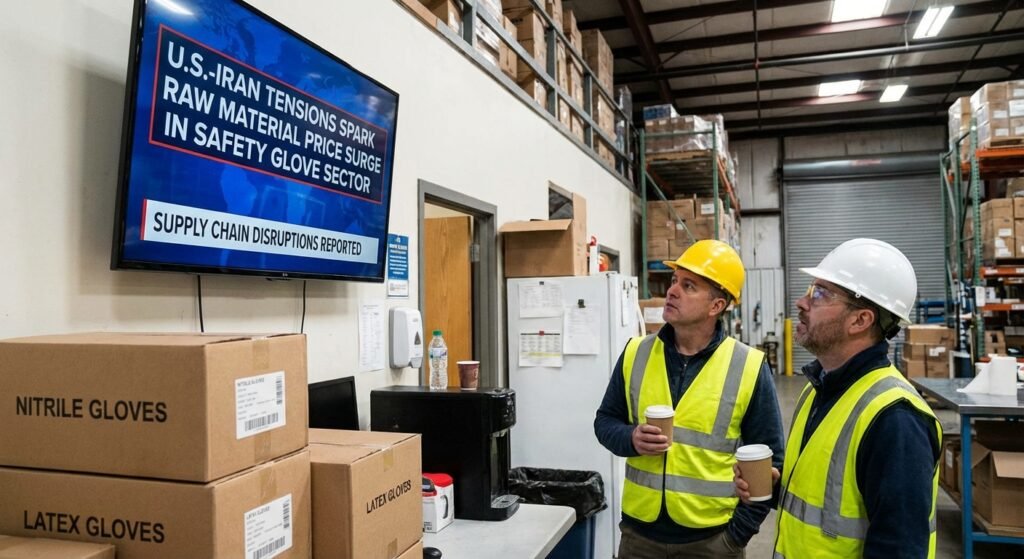
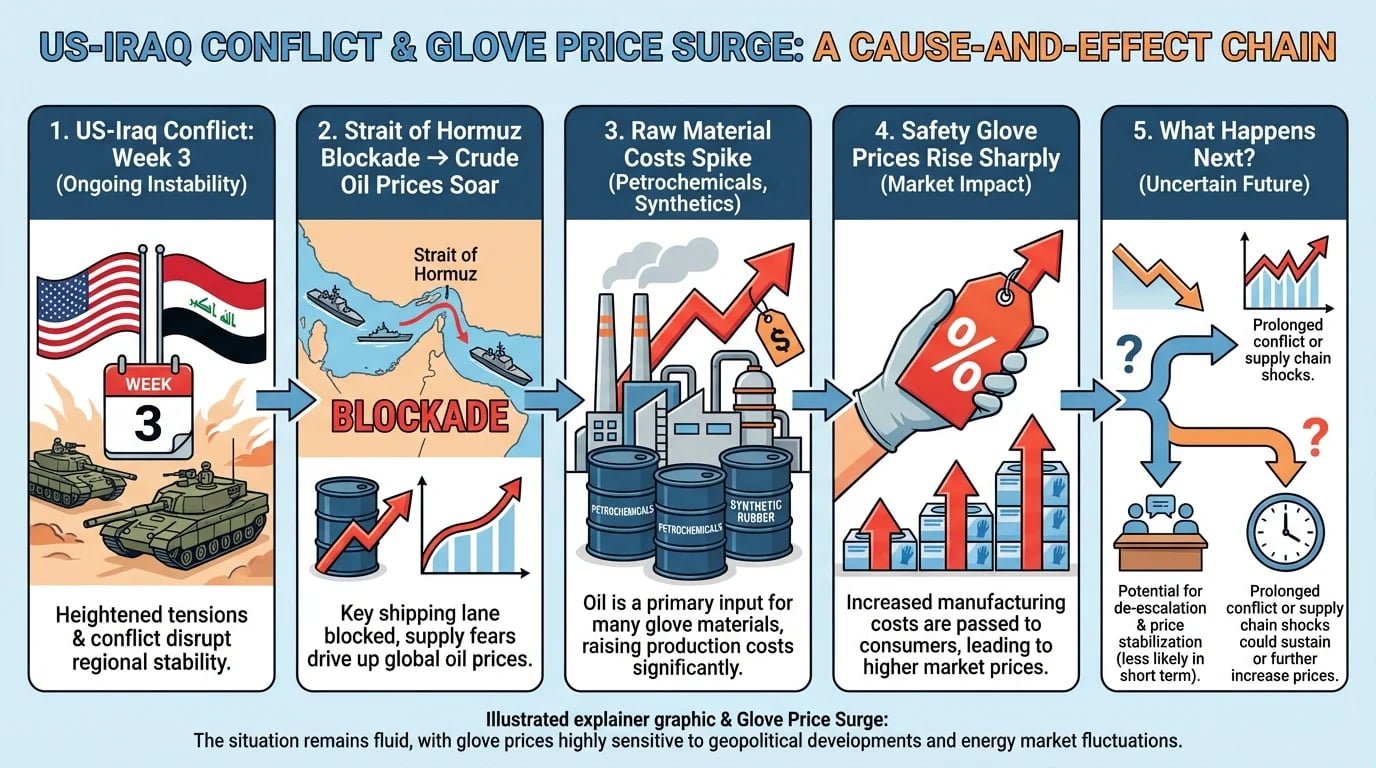
The US-Iraq conflict1 is now in its third week. The Strait of Hormuz blockade2 has sent crude oil prices3 soaring. This has sharply raised the costs of key raw materials for safety gloves, pushing up glove prices.
Indeed, the conflict has had a direct and significant impact on raw material costs4. Materials like butadiene5 and acrylonitrile6 have seen jumps of 10%-19.6% in just one week. This has directly increased production costs across the safety glove industry. Larger firms are better positioned to pass these costs on, but smaller factories face significant margin pressure. Despite price increases, the rigid demand for safety gloves means demand is unlikely to drop sharply. However, we might see dealers restocking and industry consolidation7 as a result. Partnering with leading suppliers is the best way to resist risks from black swan events.
As someone deeply involved in the safety glove industry, I have seen firsthand how global events ripple through our supply chain. This conflict is a prime example. It forces us to rethink how we manage risks and secure our supply lines.
How Have Raw Material Prices for Safety Gloves Been Affected by the Conflict?
The ongoing US-Iraq conflict has created a ripple effect across global markets. This directly impacts the cost of raw materials for safety gloves. My experience shows that geopolitical tensions always hit our industry hard.
The conflict's impact is clear. Key raw materials like butadiene and acrylonitrile, essential for many types of safety gloves, have seen price increases between 10% and 19.6% in a single week. This surge is mainly due to the Strait of Hormuz blockade, which disrupts crude oil supply. Crude oil is a base component for these chemicals. This means higher costs for us, the manufacturers, and eventually for our B2B customers.
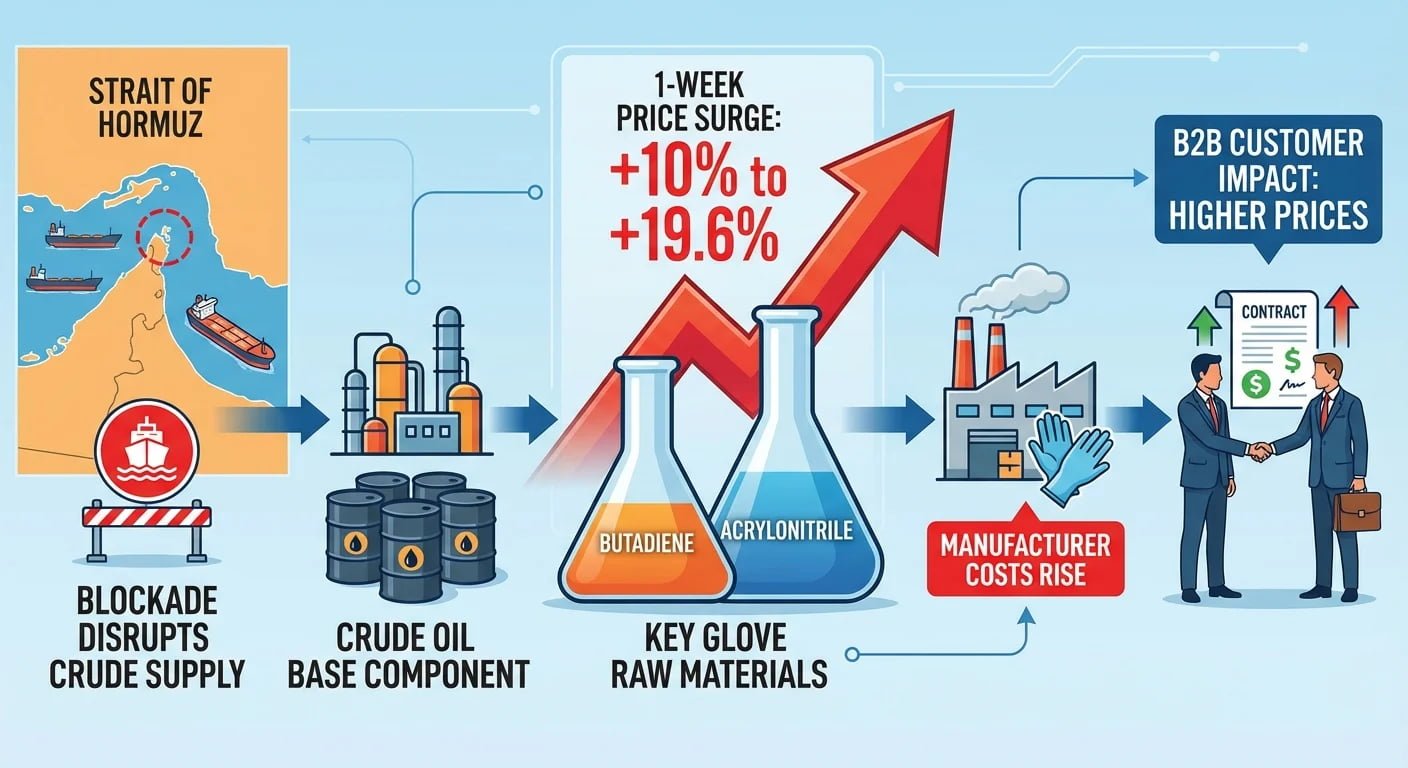
I've watched these price movements closely. It's not just about the numbers; it's about understanding the entire supply chain. When crude oil prices spike, it affects everything downstream. This includes the synthetic rubbers and plastics we use in our gloves. We, at Antafursafety, work hard to manage these changes for our partners. This ensures stable supply and pricing wherever possible.
What Specific Raw Materials Are Most Affected?
The conflict has had a notable impact on specific raw materials vital for safety glove production. Based on our monitoring, the primary materials affected are those derived from petrochemicals8.
- Butadiene: This is a crucial component for synthetic rubbers like Nitrile Butadiene Rubber (NBR)9, widely used in many of our safety gloves. NBR gloves offer excellent resistance to punctures and chemicals.
- Acrylonitrile: This is another key chemical. It is used in the production of nitrile rubber and some high-performance fibers for cut-resistant gloves.
| Raw Material | Origin (Primary) | Impact of Conflict (Mechanism) | Price Change (Approx. Weekly) | Implications for Gloves |
|---|---|---|---|---|
| Butadiene | Crude Oil | Supply chain disruption, crude oil price increase | +10% to +15% | Higher cost for NBR gloves |
| Acrylonitrile | Crude Oil | Supply chain disruption, crude oil price increase | +15% to +19.6% | Higher cost for nitrile and cut-resistant gloves |
| Natural Rubber | Plantations | Indirectly, increased demand for alternatives | Stable to slight increase | Potential shift in demand |
The reason for these surges is simple: crude oil is the feedstock for these chemicals. With the Strait of Hormuz blockade, global oil supplies are tight. This drives up the cost of production for these materials. As a manufacturer with over 20 years of experience, I know these changes impact our production costs directly. This then reflects in the prices we offer to our wholesale partners. We always aim to provide transparent information and stable solutions.
How Does This Impact Small Versus Large Safety Glove Manufacturers?
The recent surge in raw material prices creates a divide in the safety glove industry. It hits small factories differently than large ones. From my vantage point in manufacturing, this distinction is crucial.
Larger firms, with their greater buying power and established contracts, can often absorb or pass on these increased costs more easily. They have economies of scale10 and stronger financial reserves. On the other hand, small factories face squeezed margins. They often operate on tighter budgets and have less leverage with suppliers. This puts them at a significant disadvantage during times of volatile raw material prices. It creates an uneven playing field.
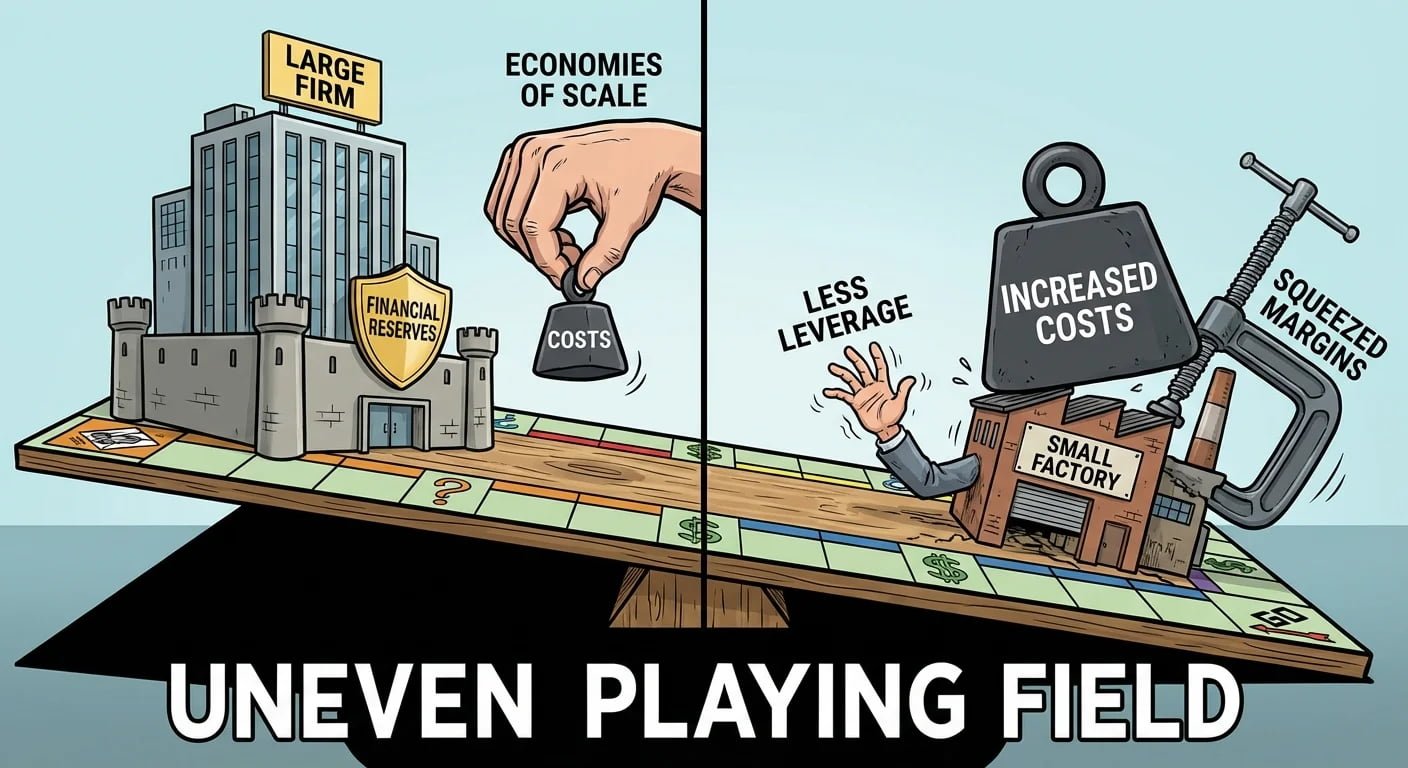
I've seen this pattern many times. Large companies can negotiate better deals for raw materials. They also have the capital to buy in bulk before prices rise further. Small companies usually can't do this. They have to buy at current market rates, which are now much higher. This makes it harder for them to compete. It's a tough situation for smaller players in our industry.
What Strategies Can Manufacturers Employ to Mitigate These Risks?
In times of rising raw material costs4, manufacturers must act strategically. Based on my long experience, there are several key approaches that can help.
- Diversified Sourcing: Relying on a single supplier for raw materials is risky. We advocate for having multiple qualified suppliers from different regions. This reduces dependence and offers alternatives if one supply chain is disrupted. This is a strategy Antafursafety employs for stability.
- Long-Term Contracts: Wherever possible, securing long-term contracts11 for raw materials can lock in prices. This protects against sudden price spikes. This is more feasible for larger manufacturers but something all should strive for.
- Inventory Management: Maintaining optimal inventory levels is key. Too much inventory means higher holding costs. Too little means vulnerability to supply shocks. We use precise inventory management12 to balance these factors.
- Cost-Plus Pricing Models: Some manufacturers shift to cost-plus pricing. This means their selling price adjusts with raw material costs. This passes some risk to the buyer but ensures profitability.
- Process Optimization: Continuously improving production processes can reduce waste. This makes better use of expensive raw materials. Our state-of-the-art factories are designed for efficiency.
By implementing these strategies, manufacturers can better navigate the challenges of volatile raw material prices. At Antafursafety, we always work to find flexible solutions for our clients, helping them maintain their market competitiveness even when costs rise.
Will Rigid Demand for Gloves Drive Dealer Restocking and Industry Consolidation?
The safety glove market has a unique characteristic: rigid demand. This means people will always need safety gloves, regardless of price changes. This has important implications during periods of rising costs.
Yes, the rigid demand for safety gloves is likely to drive dealer restocking13. Even with higher prices, end-users still need gloves for safety. This constant need will push distributors to maintain their inventory levels. As a result, we may also see industry consolidation7. Smaller manufacturers, unable to absorb higher costs, might be acquired by larger, more resilient companies. This is a natural consequence of economic pressure.
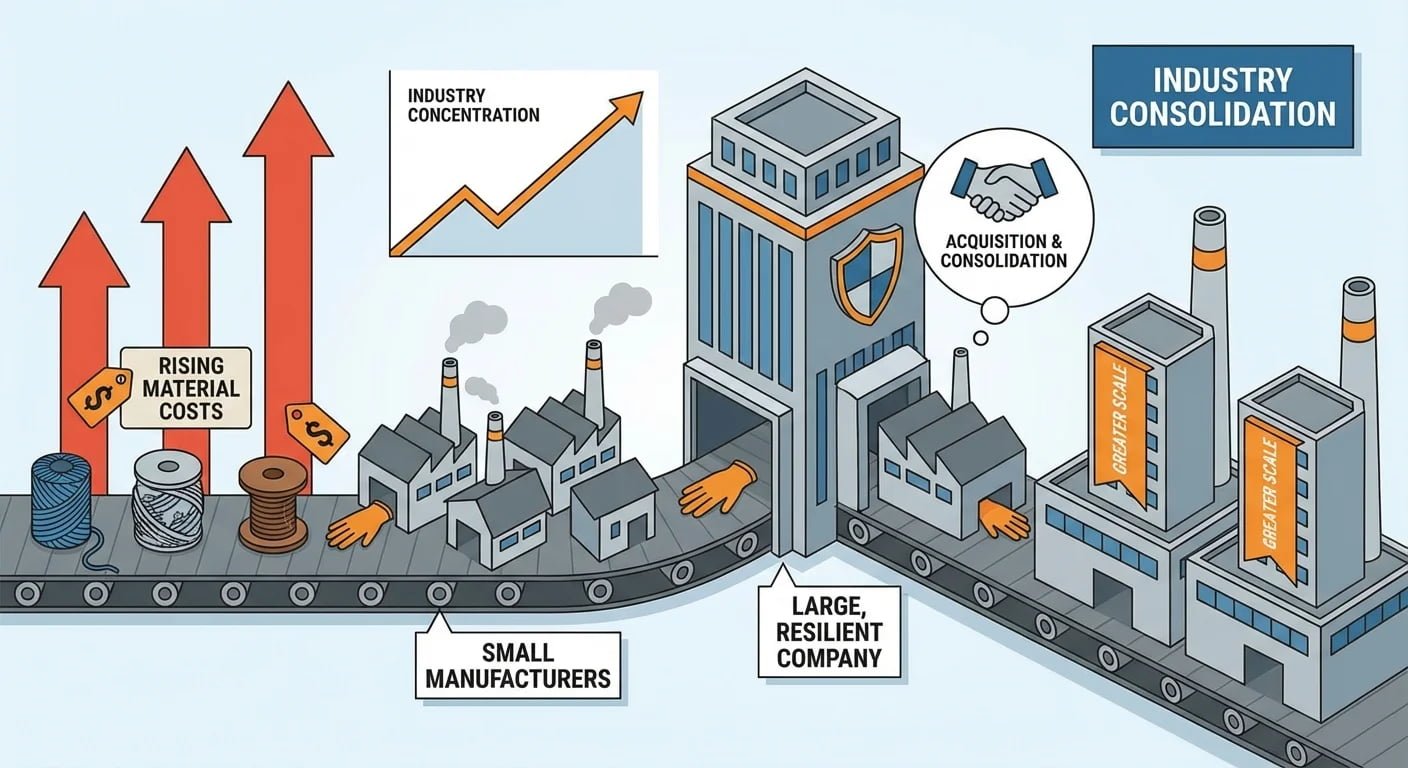
I've observed that safety is not an option; it's a necessity. This means demand for gloves doesn't just disappear. Even if prices go up, construction sites still need gloves. Healthcare workers still need gloves. This consistent demand forces dealers to keep buying. For some smaller factories, this environment becomes too challenging. They might look for larger partners or get bought out. This changes the landscape of our industry.
What Are the Long-Term Implications for the Safety Glove Market?
The long-term implications of these events for the safety glove market are multifaceted. From our perspective as a leading manufacturer, several key trends emerge.
- Increased Focus on Supplier Partnerships: The volatility highlights the importance of strong, reliable supplier relationships. Businesses will seek partners like Antafursafety. We offer stability, quality, and compliance (CE, UKCA, ANSI/ISEA, CSA standards).
- Technological Advancement: There will be a greater push for innovation. This means developing more cost-effective materials or more efficient manufacturing processes. This helps reduce reliance on volatile raw materials.
- Market Consolidation: As mentioned, smaller players may struggle. Larger firms, with better access to capital and diverse supply chains, will likely expand their market share through acquisitions. This can lead to fewer, but stronger, manufacturers.
- Emphasis on Sustainability: While cost is immediate, the push for sustainable materials and practices will continue. Companies will look for ways to be more resilient against future shocks, including environmental ones.
- Regionalization of Supply Chains: The pandemic and now conflicts underscore the risks of globalized supply chains. There may be a trend towards more regional sourcing or manufacturing. This reduces transit times and geopolitical exposure.
These long-term trends shape the future of our industry. At Antafursafety, we are constantly adapting. We provide customized solutions and maintain high production standards to meet the evolving needs of our global partners. We help them navigate these changes.
Conclusion
The US-Iraq conflict has indeed significantly impacted raw material prices for safety gloves. Butadiene and acrylonitrile costs have surged, pressuring manufacturers. Partnering with leading suppliers like Antafursafety is key to navigating these risks and ensuring stable supply.
Understanding the broader implications of the US-Iraq conflict can provide insights into market dynamics. ↩
Exploring this topic reveals how geopolitical events influence oil supply and pricing. ↩
This link will help you understand the factors driving crude oil price fluctuations. ↩
Learn how raw material costs impact various industries, including safety gloves. ↩
Discover the importance of butadiene in the production of synthetic materials. ↩
Understanding acrylonitrile's applications can shed light on its market significance. ↩
Understanding industry consolidation can provide insights into market dynamics. ↩
Learn about the critical role of petrochemicals in manufacturing safety gloves. ↩
Explore the advantages of NBR in safety gloves and its market relevance. ↩
Understanding economies of scale can help you grasp competitive advantages in manufacturing. ↩
Learn how securing long-term contracts can protect manufacturers from price volatility. ↩
Discover effective inventory management strategies to enhance operational efficiency. ↩
Learn about the dynamics of dealer restocking and its implications for supply. ↩